Philanthropy can’t be community-driven if it isn’t grounded in genuine relationship with community. And genuine relationships require listening, not as a data-collection exercise, but as an ongoing practice of connection, accountability and reciprocity.
Grantmakers for Effective Organizations (GEO) has been working on community-driven philanthropy for years — on what it takes for funders to move from exercising power over nonprofits and communities to working in authentic partnership with them. Along the way, we frequently run into a common obstacle.
Foundation leaders often describe, with real conviction, the kinds of changes they want to make and then lament that those aspirations won’t make it into practice. The reason, they say: “The board would never go for that.” In fact, they often never even test this assumption with the board itself!
This gap between what foundation leaders say they value or want to do and what they actually do is persistent and well documented in our field. The role that governance plays in the gap between values and action is why GEO created “Toward Meaningful, Valuable, Equitable Governance.” This new resource draws on two years of conversations and convenings with hundreds of grantmakers exploring what better philanthropic governance can look like and how we can get there.
Governance and listening
Governance may not be the first thing that comes to mind when you consider what it takes for funders to listen to community and what might get in the way. But think about what authentic listening requires of a foundation: an organizational culture that values community perspectives; a willingness to recognize knowledge gaps and the value of lived experience; and at least some appetite for ceding power, not just gathering input.
Grantmaker boards shape all of these conditions. When boards focus narrowly on fiduciary review and in-the-weeds grant approvals, they crowd out the kinds of generative and strategic conversations where community knowledge can actually inform direction. When staff spend their energy preparing polished presentations rather than bringing honest, complicated, relational perspectives into the room, boards can find themselves rubber-stamping decisions and having the shallowest of conversations when they could be going deeper. And when governance structures are set up to move slowly by habit and design, funders compromise their ability to listen and respond in anything approaching real time.
These patterns aren’t anyone’s fault, exactly. As our new report notes, board members are almost always well-meaning, talented people who care about the work and want to do right by it. The problems are structural, not personal — the result of systems that weren’t designed to support the kind of relational, community-driven work that the current moment (and effective philanthropy in general) demands.
Beyond representation
When grantmakers recognize that governance may be a structural problem, their response may be to address it by changing board composition; that is, by bringing more community members into the room, and diversifying who is at the table. That instinct is commendable as far as it goes. Who is in the room does matter, and grantmaker boards need more of their members to come from nonprofits or the community.
But composition alone doesn’t solve the problem, as BoardSource points out in its new resource, “Authorized Voice & Power in the Boardroom.” Bringing community members onto a board that operates the same way it always has — with the same dynamics, culture, and unexamined power structures — doesn’t change the board. It simply asks new people to conform to an old system, which can actually create harm in the process.
The knowledge and relationships new board members bring don’t automatically translate into influence. People recruited for what they know about community can end up feeling tokenized or that they were recruited primarily for the benefit of other board members’ learning rather than genuine decision making.
What we need from boards is something different. We need governing bodies whose culture, composition, and practices support entire organizations capable of genuine listening and power shifting. Boards that, instead of feeling beholden to preserving assets over all other concerns, hold themselves accountable primarily to the communities their foundations exist to serve.
In line with these ideas, some GEO members have adopted new definitions of “fiduciary responsibility” to make explicit that their primary responsibility is to community impact, not investment returns. Others have restructured how their boards spend time to ensure that trustees engage authentically with nonprofits and communities, committed to a shared purpose.
Transforming governance is not easy. “Toward Meaningful, Valuable, Equitable Governance” can help foundations work through the layers of complexity. Grounded in real examples from foundations of every size and type, it is honest about the barriers, including the ways that boards and staff leaders, sometimes without realizing it, perpetuate the very dynamics they’d like to change.
It also offers something more hopeful: a picture of what governance looks like when it is working well, and a set of nine concrete themes for getting there. What matters, it argues, is treating governance as something that grantmakers have the power to change.
Many funders engaged in community listening, and those who aspire to do more, may have felt the drag of organizational structures that don’t feel purpose-built for the work you’re now trying to do. You may have experienced the frustration of listening well at the program level and watching what you heard fail to translate into changes at the organizational level, and wondered what it would take to be the kind of institution that can listen and respond to the community with integrity and consistency.
Those are governance questions. And “Toward Meaningful, Valuable, Equitable Governance” takes them seriously. We hope you’ll read it, and that it gives you language, examples, and practical entry points for thinking about your own board.
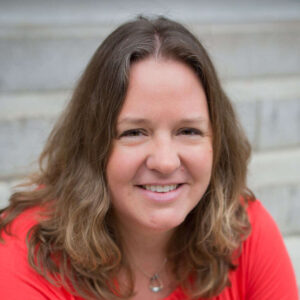
Meghan Duffy
Executive Vice President, Grantmakers for Effective Organizations (GEO)
GEO is bringing funders together and sharing additional resources about governance throughout the year. Reach out if you'd like to connect with other grantmakers exploring governance.