Editor’s note: We invited Listen to Community partner Feedback Labs to write about what they’re seeing on the ground in New Mexico, ahead of their upcoming feedback summit, Feedback+Albuquerque, which takes place October 14–16, 2026. Participants will hear from local leaders and national experts on what high-quality listening looks like today, attend practical “Skills Labs” sessions to up their listening skills, attend LabStorm site visits with local nonprofits, and trade notes with funders navigating similar listening challenges.
To register or learn more, go here.
At Feedback Labs, we work closely with philanthropic funders across the country through our convenings, research, and our funder community of practice, and we are regularly inspired by the examples of funders investing meaningfully in listening to the communities at the heart of their work.
But we also hear similar tensions come up again and again. How can funders make sense of — and move forward after receiving — conflicting community input? How can philanthropy build real partnerships with grantees and peer funders to listen more effectively and with less burden on our partners? How can they use new tools to expand the scale of listening without losing sight of the connections and relationships listening hopes to strengthen?
My job as manager of fieldbuilding at Feedback Labs is to help funders navigate these challenges. And when I moved to New Mexico in 2024 and started getting to know the philanthropic sector in my new state, I found that funders in New Mexico are already working through these questions in practice, and they’re doing it in ways I believe other funders can learn from.
What I found
Collaboration is the norm here, not the exception. Increasingly, we’re hearing from funders across the U.S. that they are interested in building shared listening infrastructure, both to reduce the burden of overlapping listening efforts on communities, as well as to collaborate with peer funders in responding to community feedback and input. In New Mexico, nonprofits, funders, and local governments work unusually closely together. It’s not a single grant-funded program or a one-off convening, but something that shows up almost as a default across the sector. For example, in 2025, the Thornburg Foundation, Anchorum Health Foundation, and Santa Fe Community Foundation partnered to send a shared grantee survey to better understand the impact of federal funding cuts.
History shapes how people make meaning from what they hear. When funders listen in high-quality ways, they are almost guaranteed to hear conflicting feedback. Determining how to respond while staying true to organizational values can be a challenge, and at times, create a barrier to deeper listening. Native, Hispanic, and Anglo communities have shaped New Mexico for centuries, and that history is a living, everyday practice of dialogue, understanding, conflict, and compromise. People here have long experience navigating difference because they’ve had to.
Local philanthropy is small, but mighty. With a state population of just over 2 million, New Mexico has few foundations or big-name donors, but the ones here are notably innovative and committed to community voice. The Northern New Mexico Youth Fund, a collaborative effort of 21 philanthropic, state, and corporate partners, for example, directs its giving with the help of a Regional Youth Advisory Council, which has real decision making power over grant decisions.
Funders treat listening as ongoing practice, not a check-box activity. Building buy-in for listening takes internal advocacy and investment, and we sometimes hear that funder listening efforts become a one-and-done: a few listening sessions or a one-off community survey, and then back to business as usual. The organizations I’ve talked to in New Mexico, on the other hand, are building listening into how they operate, year over year. Take The Albuquerque Community Foundation’s Rooted Together grant program, which prioritizes being led by community voices at the neighborhood level and evolves based on community and nonprofit feedback.
Across the board, I’ve been inspired by the ways in which listening in New Mexico has moved from a checkbox activity to the way that decisions actually get made.
New Mexico’s recent adoption of universal child care, for example, was shaped by input from providers, parents, and advocates, and is already a subject of study. Meanwhile, as local governments weigh controversial new data centers, officials in Doña Ana County are considering citizen-led monitoring, which could be a way of keeping community voice in the room for the long-term. And on water, diverse coalitions continue organizing together to protect the state’s resources, a reminder that sustained collaboration across different interests can outlast any single policy debate.
Shining a light on New Mexico
New Mexico’s population also offers a preview of where the rest of the country is heading. As a minority-majority state with a growing urban population and a large immigrant community, it’s already navigating a demographic shift that other places are only beginning to face, and political leaders are taking notice.
There was too much exciting and innovative work happening here not to bring the broader feedback field to see it. That’s why we’re holding the 2026 Feedback Summit, Feedback+Albuquerque, in New Mexico October 14–16.
The Summit’s theme is Listening in a Shifting Landscape, and our three tracks reflect many of the lessons we’re learning from funders in New Mexico:
Listening Across Difference looks at how to engage across identity, power, and lived experience with care and intention, including how to make sense of conflicting feedback once you have it. New Mexico’s layered history makes it a natural place to explore with these questions.
Listening in Partnership explores how funders, nonprofits, and local and Tribal governments can collaborate to align efforts, reduce duplication and community burden, and learn together, which is a regular practice for many of the organizations we’ve met here. New Mexico’s tightly knit philanthropic community will inspire attendees to explore new opportunities to collaborate.
Technology in Service of Listening examines how AI and other tools can support (rather than replace) high-quality listening, with attention to ethics, equity, and environmental impact. New Mexico, like many places, is considering how to balance the opportunity of new technologies with environmental impact and other long-term implications in our listening practices and relationships.
Join us in Albuquerque next month
As Winoka Yepa, director of research and education with Native Americans in Philanthropy and a member of the Feedback+Albuquerque Summit Advisory Committee, put it: “Feedback is powerful because it brings us back to the people at the heart of the work. It asks us to slow down, listen deeply, and let community voices guide where resources flow.”
Too often, as Winoka says, New Mexico gets defined by its challenges rather than its brilliance. This summit is our chance to change that — to put the extraordinary work happening here in front of the people doing similar work elsewhere. We’d love to see you in Albuquerque.
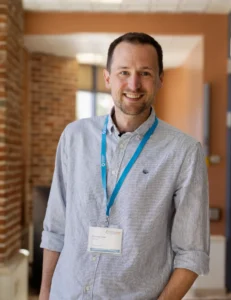
Michael Gale
Manager of Fieldbuilding, Feedback Labs