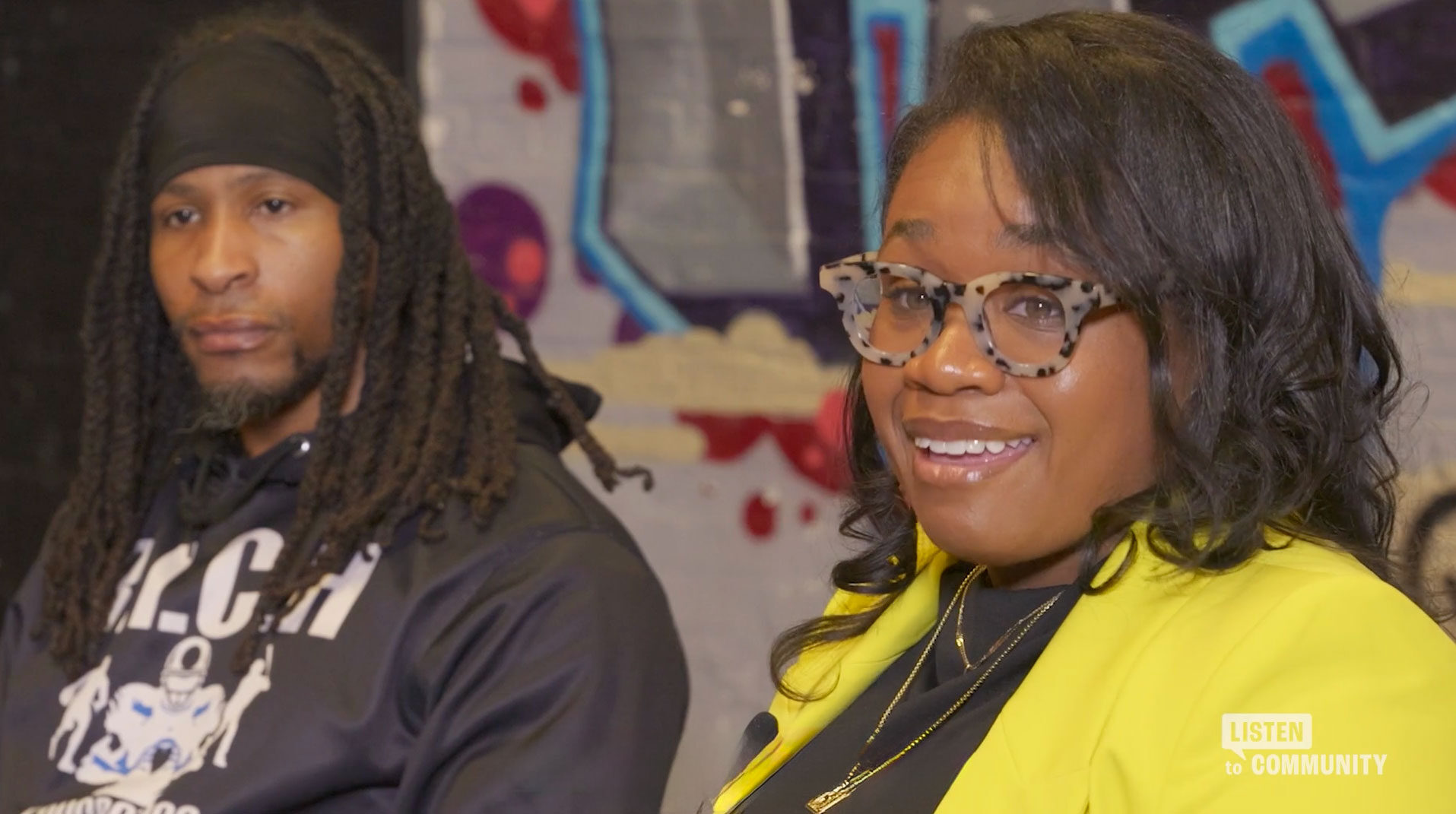
Five grassroots community leaders from Baltimore speak candidly without funders in the room about the realities of what it feels like on the other side of the funding table. Their conversation, captured in a 30-minute video, offers an honest and sometimes painful snapshot of how community members experience philanthropy.
Watch a preview
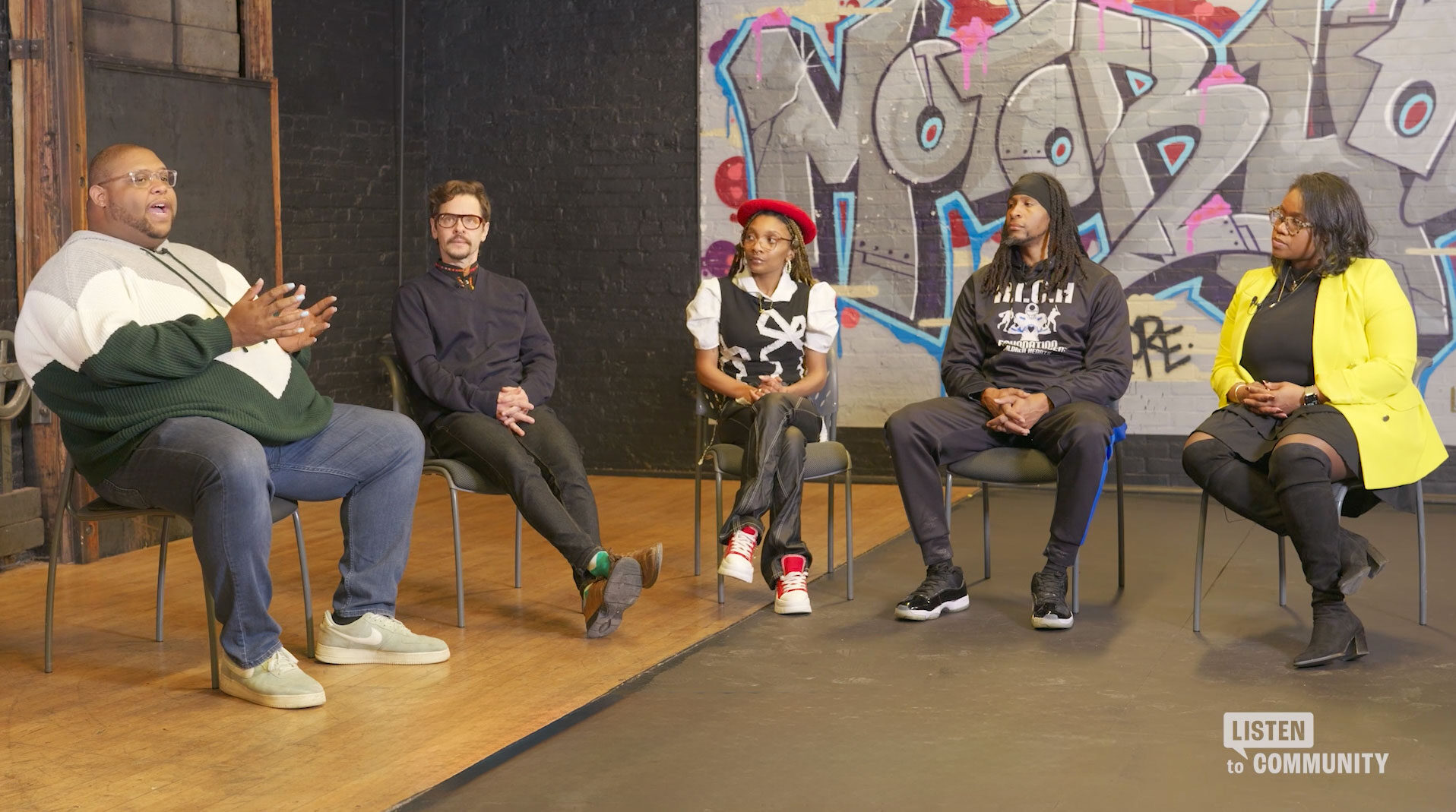
Fund for Shared Insight, a founding partner of the Listen to Community initiative, convened the discussion to explore funder listening from the perspectives of community members. Filmed at Baltimore’s historic Motor House arts space, the video surfaces insights — both specific to the city and universal — about how power shapes every interaction with funders, how listening happens (or doesn’t) in moments large and small, and why philanthropy needs to change.
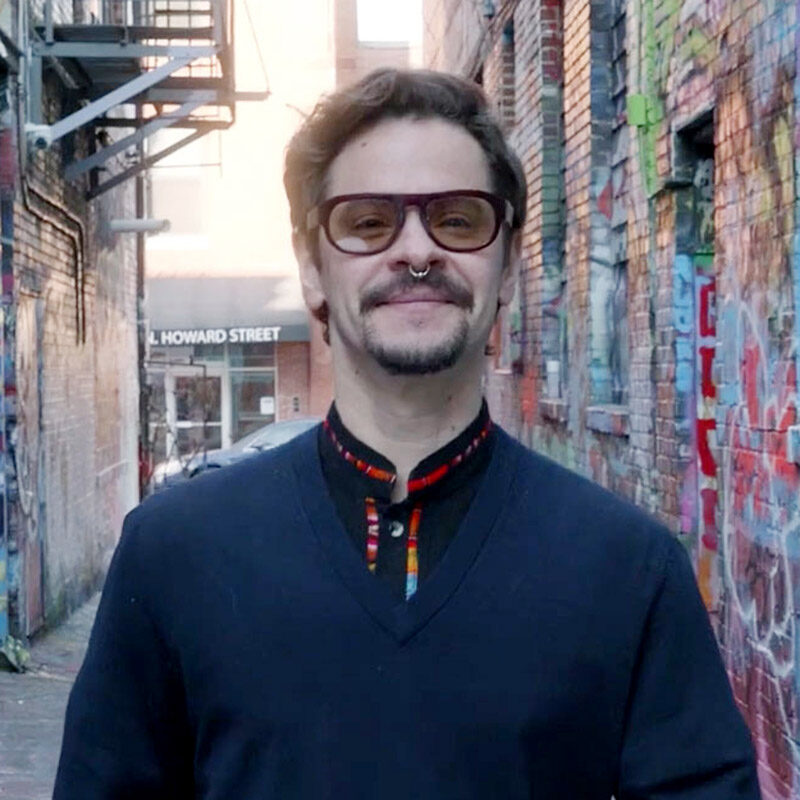
“Solutions to existing problems that don't arise from the community most impacted, that don't arise from their wisdom, from their lived experience and from their genius, don't have lasting power,”
Rev. Elazar Zavaletta, founding pastor of Good Trouble Church
Representation and power imbalances
An opening question about community representation prompted an immediate reaction from Legacy Forte, co-founder and executive director of BMORE BLXCK, a youth-led grassroots organization. “Getting involved in this work so young, I didn’t really know what I was signing up to until it was too late,” they said. “I had to kind of get comfortable with being this person in the community, because I didn’t even realize that I was until people were telling me.”
Others echoed this discomfort and responsibility. Jabari Lyles, principal at Jabari Lyles Consulting, noted the particular challenge of representing LGBTQ communities: “We’re not one community. We are an amalgamation of many communities. And I think being an effective leader for this community, you have to know the intersections and the specificities.”
The dynamic reveals an invisible asymmetry in philanthropic relationships: while funders get to show up as individual listeners and observers, community leaders are routinely expected to speak for entire categories of people. This positioning shapes every interaction, from one-on-one meetings to public panels, adding layers of pressure that funders may not recognize but that profoundly influence how conversations unfold.
“I feel like it s so important to get out into the community, listen in different languages, being humble, showing humility, taking the time to put yourself in these communities."
Kameron Giggers, executive director and founder of R.I.S.E. Arts Center of Baltimore

As the discussion in Baltimore turned to their experiences with foundations, the leaders revealed how power imbalances shape what gets shared and what gets heard. Said Lyles: “Sometimes you feel as though you have to tell the most heart-wrenching story or convince funders that some of the most terrible things are happening to your community, and the better that you can paint the uglier picture, then you will be best in the running for the funding.”
This reality is connected to deeper concerns about how race shapes the power imbalance. Forte spoke about “the pressure to be a palatable Black person, to be respected enough for somebody to see you and say, okay, that’s worth my money.” Lyles also noted their own experience of feeling “really uncomfortable sitting across the table with this person who represents millions of dollars, and little old me who’s making minimum wage, trying to raise money for my nonprofit.”
Access and mystery
Even before the storytelling can begin, according to the leaders, there’s a fundamental barrier: access. “You almost always have to know somebody” to get anywhere with philanthropy, Forte said.
This creates a listening gap. Funders who want to listen broadly often end up hearing from the same people, those who already have relationships within philanthropic networks. Timothy Rich, who works with youth affected by violence, trauma, poverty, and oppression through the R.I.C.H. Foundation, described how relationships built through personal connections and social media documentation of his work eventually opened doors, but only after he found someone willing to vouch for him.
When listening works
Despite frustration, each participant could share examples of funders who listened well by approaching relationships differently. Kameron Giggers, executive director and founder of R.I.S.E. Arts Center of Baltimore, an organization that provides arts education programming for neurodivergent youth, described site visits where funders “are integrated into our program where they’re interacting with the kids, they’re helping out staff members, and they are staying longer than the time that they’re supposed to stay.”
Rev. Elazar Zavaletta, founding pastor of Good Trouble Church, a Baltimore-based faith community that provides worship, housing, and essential services, described a transformative relationship that began when a foundation reached out directly after hearing about the church’s work.
“The feeling was so different. It wasn’t like, let me make sure that you’re doing what we want to see. It was like, how can I be a part of this?” The conversations led to the Good Trouble Guardians program, a community-led safety effort without police presence.
Lyles highlighted relationships that “started with a bunch of trust,” where funders recognized: “Jabari, we know that you are the person to be able to lead this initiative,” and success wasn’t measured “based on their metrics or their priorities.”
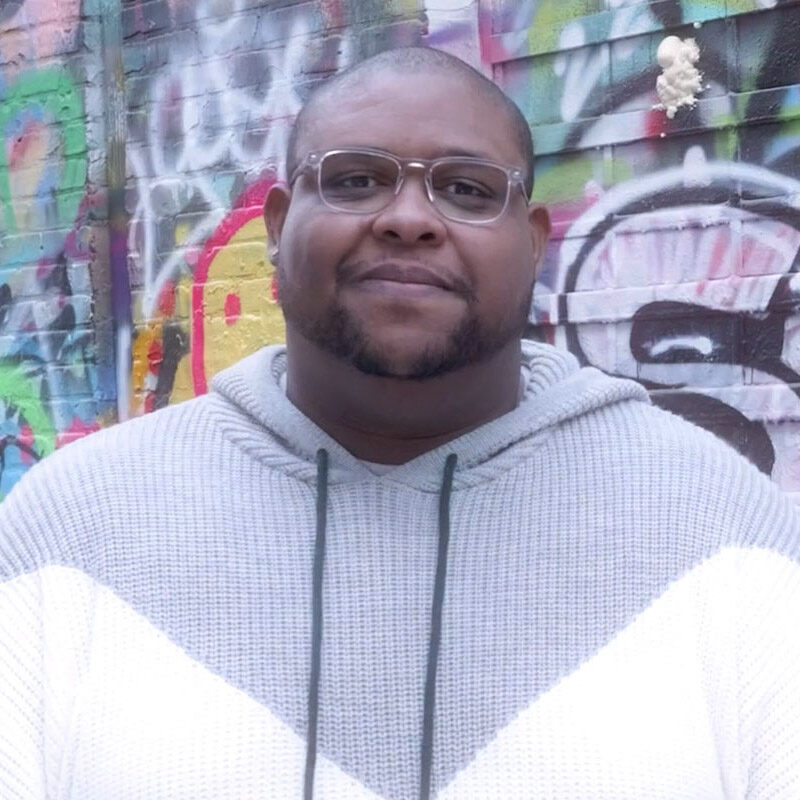
“I would love to attend a panel of funders where we are in the audience, and we get to watch them talk about how they intend to contribute to our communities. And they are reporting to us about the opportunities that they have.”
Jabari Lyles, principal at Jabari Lyles Consulting
Flipping the script
Lyles also offered perhaps a provocative notion when discussing how funders could shift power dynamics: “I would love to attend a panel of funders where we are in the audience, and we get to watch them talk about how they intend to contribute to our communities. And they are reporting to us about the opportunities that they have.”
Rev. Zavaletta played on that inversion of power, too, saying that funding the efforts already going on in communities represents an opportunity for funders: “Whether or not you are willing to get excited or fund the work that’s happening, we will get it done,” Zavaletta said. ”It’s a gift for you to be able to be a part of this work.”
Watch the full conversation