For philanthropic leaders committed to more inclusive and participatory grantmaking, the shift from “hearing” to truly listening is not cosmetic — it requires a shift in roles, worldviews, and organizational culture. Through our recent experiences with the Scattergood Foundation’s Community Fund for Immigrant Wellness, we see a promising example of what becomes possible when foundations see communities not as beneficiaries but as experts and partners.
The Community Fund is one of Scattergood’s signature participatory funds, which engage community representatives and other stakeholders in developing strategies and making decisions related to funding allocation. Operated since 2017, it addresses the behavioral health of immigrant and refugee communities by providing financial support and capacity building to immigrant-serving organizations in the Philadelphia region.
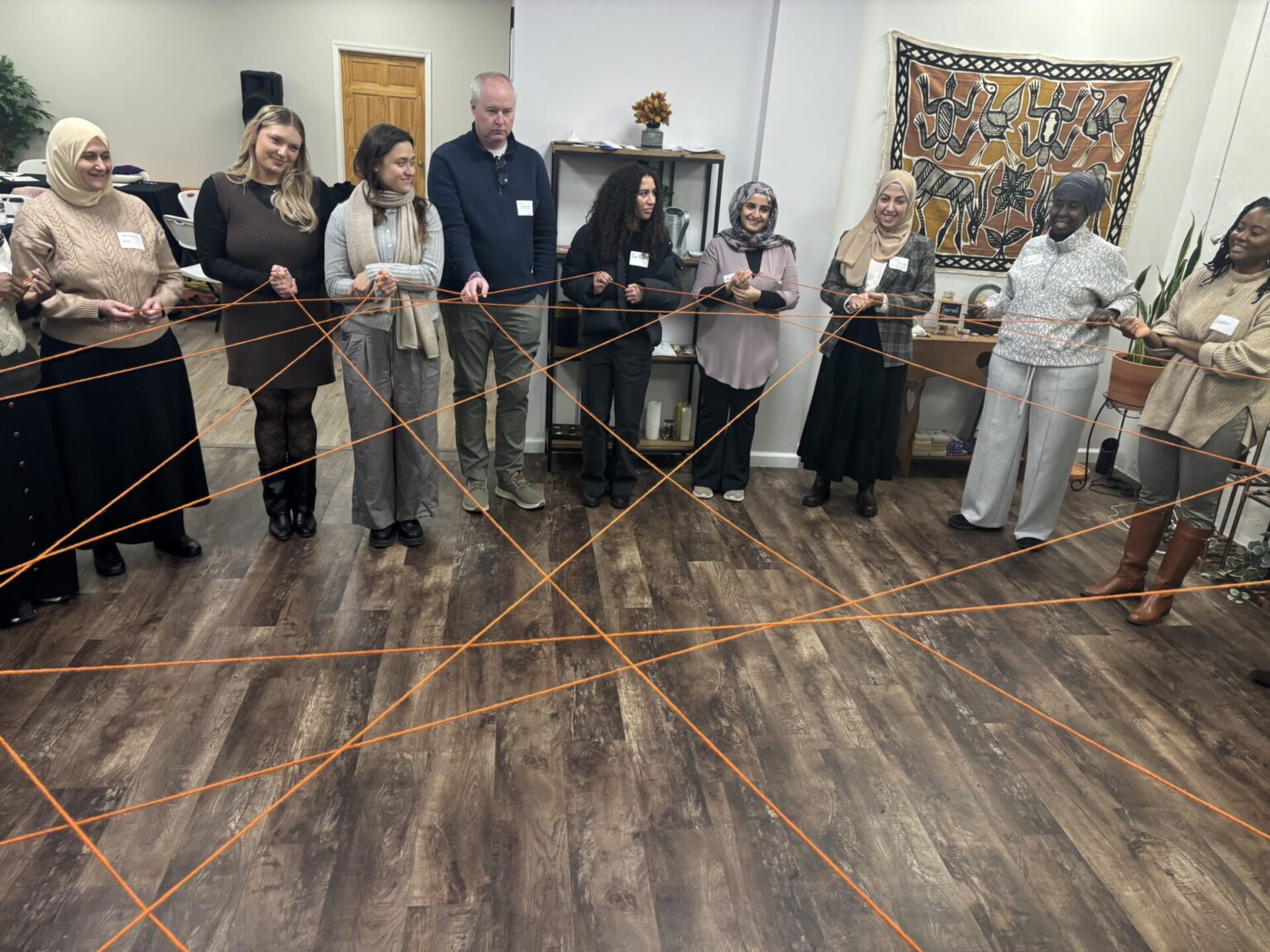
At the heart of the fund, is a Community Advisory Committee, comprised of representatives from immigrant-serving community-based nonprofits who have lived experience as immigrants or with the immigration system and deep community knowledge of immigrants across the region. The committee, working along with foundation staff, co-shapes the fund’s framework and purpose, sets priorities, and provides strategic oversight.
This kind of asset-based partnership between the Scattergood Foundation and the community advisory committee continues to reshape the traditional power dynamics often seen in philanthropy.
Under its direction, the fund has evolved over its seven annual grant cycles so far from having a bounded focus on mental health to championing a broader notion of wellness. The committee has also pushed to create culturally responsive solutions to behavioral health and culturally grounded strategies for healing, dignity, and joy.
Because immigrant communities are not monolithic, different advisory committee members bring diverse experiences and viewpoints and do not always agree. The group therefore works intentionally to build a culture of listening in which all committee members, along with the staff facilitators, listen to one another, developing trust and shared understanding over time. Based on this kind of relationship, even if the group makes a different decision than one member would prefer, everyone understands the reason behind it.
Immigrant communities help redefine wellness
Early on, advisory committee members identified that the Community Fund’s definition of mental or emotional health did not reflect the experiences of immigrant communities. The definition was based on Western, clinical, and pathology-based models, which often focus primarily on individuals. The committee members instead emphasized an interconnected understanding of wellness shaped by the everyday realities of immigrant life: keeping families together, building supportive networks, navigating acculturation, achieving social and economic integration, developing skills to participate in community life, and strengthening civic identity. While emotional well-being is closely connected to all of these dimensions, committee members pushed to expand the Community Fund’s focus beyond emotional health alone.
They also went on to adopt a more expansive definition of wellness. The committee incorporated cultural, relational, and legal factors into a federal health agency’s “Dimensions of Wellness” definition and the fund began supporting integrative programs that treat individuals as whole people rather than focusing on a single aspect of health. The committee also developed its own new working definition of behavioral health as “a dynamic state of well-being that enables individuals to use their abilities in harmony with societal values.”
Grounding goals in the values of the community
Community advisory committee members also emphasized the need to address systemic barriers that shape wellness in immigrant communities, including oppression, poverty, and trauma experienced in their native countries and during the migration processes.
As a result, they worked with foundation staff to establish four core goals for the Community Fund grounded in the values, principles, and aspirations of immigrant communities:
- Encouraging care, positive coping strategies, and collective healing with immigrant communities
- Creating spaces where participants can build meaningful community connections
- Fostering dignity and self-agency among participants
- Centering participants’ cultural practices and traditions
This kind of asset-based partnership between the Scattergood Foundation and the Community Advisory Committee continues to reshape the traditional power dynamics often seen in philanthropy. Rather than positioning advisory committee members as mere informants, Scattergood’s participatory process recognizes them as knowledge holders and resource providers whose lived and learned experience can deepen the foundation’s understanding of wellness, dignity, and community priorities.
In turn, Scattergood staff has shifted from the more conventional role of defining strategy for communities to the role of listeners and learners, approaching the work with cultural humility and openness. The culture of listening that has been nurtured over time has also created space for advisory committee members — sharing different immigrant community experiences and perspectives — to learn from one another. In that sense, the partnership has become a trusting space in which listening supports more thoughtful, collective, and dynamic decision making.
Shifting roles makes real listening possible
As we reflected on the Community Fund’s participatory practice from our three different positionalities — community advisor, funder, and researcher — we found that a shift in identity among the participating foundation staff was crucial for effective listening. When staff relinquished their fixed role as “givers,” the nature of their listening changed. Questions they explored with the community leaders became more open-ended and asset-based. Biases and assumptions everybody holds were surfaced and challenged. In this type of space, funders do not hold power over communities; instead, power grows through trusting relationships and shared understanding built together.
Listening, in this context, becomes an act of humility, curiosity and mutual respect, leading to co-building strategies:
- Listening as learners, by recognizing communities as experts in their own experiences
- Listening to understand, by being open-minded to challenge and shifting one’s own perspective
- Listening to act, by building strategies rooted in that understanding rather than forcing alignment with preexisting frameworks
From ‘giving to’ to ‘working with’
For philanthropic leaders, this type of participatory practice demands a courageous shift: The question is no longer whether funders are listening, but how and from what position. Are they listening to seek community inputs for their existing concepts and processes, or to co-create new ones? Are they fostering a culture of listening in which diverse community perspectives can be shared and understood?
A community leader on the Community Fund’s advisory committee reflected on that change at Scattergood. The leader remembers wondering at the group’s early meetings “why are we thinking about … giving something to people? Why don’t we rethink and think more about working with people and how people can come to the table?” Those questions, the community leader said, led to the many conversations that shaped a participatory process focused on “how immigrants who will be impacted by the grant can be decision makers.”
The Scattergood Foundation’s example shows what becomes possible when funders shift their position — from defining strategy to learning alongside communities, from seeking input to co-creating solutions. That shift is what makes deeper listening possible, and deeper listening is what drives transformational change for the people in the room and the communities they serve.
Caitlin O'Brien
Director of Learning and Community Impact, Scattergood Foundation
Manuel Portillo
Community Advisory Committee Member, Scattergood Foundation
Hitomi Yoshida
Former Graduate Fellow, Scattergood Foundation