In Washington State’s far northwest corner, Whatcom County has been weathering a series of disasters over the past decade — the COVID-19 pandemic, two devastating floods on the Nooksack River, and, since last year, Immigration and Customs Enforcement (ICE) raids tearing families apart and putting them on edge.
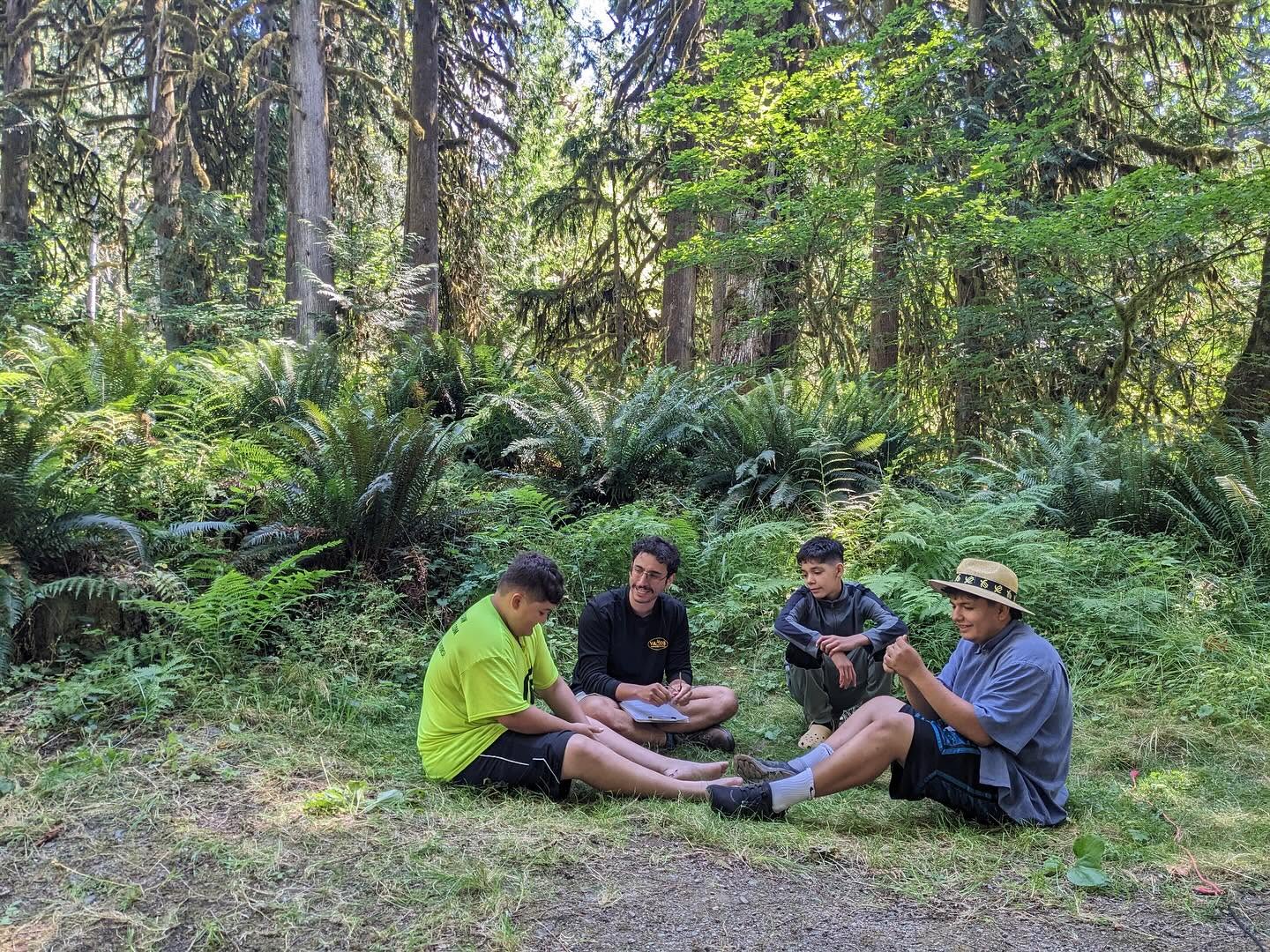
Community members have noted that responses to these disasters from government agencies and philanthropic funders have often disregarded the knowledge and recommendations of people on the ground. Vamos Outdoors Project, a community organization with many staff who are part of the Latine and migrant communities they serve, is among the groups witnessing this increasingly frustrating disconnect.
Vamos leadership team member Julián Medina-Schroeder recalls a workshop where a local health department wanted to build relationships with the Latine community to address water quality after the flood, but then explained that it couldn’t provide the medical services the community wanted. His colleague Walter Topete saw a foundation ask for proposals for disaster preparedness but then not count one of the biggest disasters on local families’ minds: the ICE raids. The team continually sees community members pointing to what they need, like the kind of public health services that were funded during the pandemic, but funder money hasn’t followed.
Andy Basabe, a Vamos founder and leadership team member describes the familiar cycle: funders and agencies ask, community members answer, and the answers go unheeded.
“We’re constantly being asked to tell these things, but they’re the same things we’ve been telling anyone,” says Basabe. “The issue is the lack of agency and resources.”
Vamos Outdoors Project’s relationship with at least one foundation in the region is beginning to move against that trend. In recent years, the Vamos team has noticed Mount Baker Foundation showing up with more curiosity and a willingness to work differently in response to what they hear. In 2025, the foundation made a $200,000 unrestricted matching grant to Vamos, the nonprofit’s largest single award, allowing them to support the community’s priorities they’ve identified, including sustaining programs for youth, helping families meet basic needs, and advocating for systems that better serve the community.
[The nonprofit leaders] talk about a future where instead of community groups trying to fit into funders’ goals, the community sets the agenda, and funders coordinate to meet their goals and address the priorities they have already articulated.
Mount Baker was formed in 2017 with the proceeds of the sale of the Mount Baker Kidney Center, which provided dialysis services in Whatcom County. The foundation now serves the county as a whole, with a focus on people with kidney disease and communities most impacted by health inequities. It describes itself as believing in “community-led approaches that tackle health inequities at their root” and serving as “partners in lasting solutions with communities leading their own change.”
Living up to that vision has required an evolution that continues today, says Maria Macpherson, who oversees the foundation’s grantmaking. One key has been developing its governing board from being made up predominantly of white retired doctors and lawyers to one that now includes nonprofit and community leaders more representative of the populations the foundation prioritizes. Board members include the executive director of the Whatcom Racial Equity Commission and a first-generation college graduate working at the intersection of public health, social justice, and higher education.
The foundation is also reshaping its advisory committee, which has the final vote on much of the foundation’s grantmaking, to be more reflective of the community. Originally, it was made up entirely of people with ties to nonprofits, schools, and government agencies. Now, acting on feedback from the committee itself, it includes community members unaffiliated with other organizations. The foundation’s goals, Macpherson says, include having such community members fill 60 percent of the committee’s seats, and making the experience of serving on the committee more welcoming to people from different backgrounds.
“How do we make our space a space where folks feel comfortable voicing their opinion?” MacPherson says the foundation is asking. “Because even though we have some folks in the room who we want there, what we noticed last year is they’re quieter or they’re not saying their full opinion.”
The foundation is developing an onboarding process to clarify expectations for committee members and prepare them for discussions about grantmaking budgets and funding decisions. To make committee meetings more inviting, Mount Baker is moving away from a formal agenda using Robert’s Rules of Order, and making “built-in time for agenda-less relationship-building.” Food is provided at the meetings, and the foundation is looking into offering childcare and a Spanish language interpreter. And, Macpherson says, they are considering meeting in community spaces instead of requiring that committee members always come to Mount Baker’s offices.
Mount Baker has been making changes to shift power to communities in other ways, too, Macpherson says. It has increased its payout amount — tripling giving since 2020 — and has moved largely to making unrestricted grants to organizations, like Vamos Outdoor Project, that are rooted in the community and reflect grassroots leadership.
Mount Baker is also leaning into existing relationships to expand connections, listening, and grantmaking in the community. For example, it was through a relationship with a larger organization that the foundation connected with a rural Latina community member who has now received three years of funding from Mount Baker to serve food in her community.
“She has those roots in the community and she has that spirit. She’s there to help people,” says Macpherson, who now counts the woman as a friend. Mount Baker’s ability to work with her, she says, “wouldn’t have happened without that relational piece.”
Medina-Schroeder of Vamos Outdoors Project sees a relational thread woven throughout the larger work, being done formally and informally, of shifting agency to the community.
“There are all these deeper layers of relationship-building and healing and creating new spaces together that can happen, like when I play soccer in one of the local leagues and I play with the kids or one of the moms,” he says. “Those deeper levels are where a lot of advocacy work happens.”
He and the Vamos team talk about a future where instead of community groups trying to fit into funders’ goals, the community sets the agenda, and funders coordinate to meet their goals and address the priorities they have already articulated. (Read our conversation with Vamos Outdoors Project here.)
Looking at Mount Baker’s work ahead, Macpherson sees promoting this kind of reorientation among funders in Whatcom County as both a challenge and an opportunity for the region — one where funders work in greater collaboration, and where, as she puts it, “community voice and those strong community partners are at the heart of it.”