“Who are you accountable to?”
This is a question, says Sharon Bush, president of Grand Victoria Foundation, that she heard from community organizers when traveling around the state of Illinois on an informal listening tour at the start of her tenure in 2018.
Her answer, informed by more listening, learning, strategic reframing, new ways of grantmaking, and, most critically, she says, a foundation-wide “mindset shift,” now is: “I want Black people to see themselves in our work. That’s who we’re accountable to.”
In recent years, Grand Victoria Foundation has pursued a Racial Justice Framework that centers community power-building, elevating Black voices and leadership as the pathway to change.
Highlighting the work, Listen to Community co-founding partner the National Committee for Responsive Philanthropy recognized Grand Victoria Foundation this year with its Changing Course Award for Incorporating Feedback. NCRP praised the foundation as having “transformed … from traditional philanthropy to an unwavering commitment to building community power and advancing racial equity.”
Founded in 1996 by the Grand Victoria Casino in Elgin, Illinois, the foundation has awarded more than $184 million in grants throughout the state. Its goal has always been to catalyze “significant and sustainable change.” The transformation in recent years is not only in how the foundation funds — now supporting community organizing, for example — but also in who is driving and designing that change. Bush says grassroots community leaders closest to the work of racial justice and equity are asking the questions and providing the partnership and leadership that “spark” the foundation’s work.
Reflecting on the importance of connecting with local leaders before and during the meetings: 'It was real relationship-building and a belief in the people.'
Sharon Bush, president, Grand Victoria Foundation
Putting a ‘foot on the soil’
During Bush’s travels to listen across the state, she would spend a day or two in different communities, from Rock Island in the North to Carbondale in the South, “to literally go put my foot on the soil of places we had potential to touch.” One of those visits, which was particularly influential, was to East St. Louis, a historic community shaped by anti-Black violence and disinvestment. There, she spent a rainy evening speaking to elders and young people in the basement of New Life Community Church.
The conversations emphasized the juxtaposition between the residents’ clarity about their community’s challenges and the vision of young leaders to make East St. Louis “a place where people come to live, work, and play.” They led a few years later to the church and other local organizations hosting the entire board and staff of Grand Victoria Foundation for two and a half days of meetings and shared meals with nonprofit leaders, community organizers, and residents.
“We had a blast,” Bush says. “Because we were in fellowship with each other and with the people who live there … We got to talk to each other over a sandwich or a cup of coffee.” Reflecting on the importance of connecting with local leaders before and during the meetings, she adds, “It was real relationship-building and a belief in the people.”
Through the discussions, community leaders emphasized the need for philanthropy to contribute to fundamental transformation in resource allocation, infrastructure, and accountability, as Grand Victoria Foundation shared in a story and video highlighting community voices.
“I may not be here to see it, but we will get there,” said Mamie Cosey, a longtime East St. Louis resident leader. “Do you hear me? We will get there.”
Following the visit, the foundation’s board expanded funding to organizations led by East St. Louis residents working to make change.
Other changes also grew from the foundation’s broader work to examine its mission, funding priorities, and internal culture. It has organized staff-led learning circles, equity audits, and the creation of a “Culture Crew” intended to foster accountability and inclusion across the organization. Most of its grants are now multi-year and for general operating support. It has increased rapid-response funding for community needs, and substantially increased support for Black-led organizations across the state.
Setting off “on a whole different pathway,” says Bush, has also meant moving away from the issue-based work it had been supporting — for example, on early-childhood education reform, land and water protection, and economic development. Now it directs most of its funding toward systemic change efforts to advance equity and justice, and it engages in more community-driven funding practices, including a participatory grantmaking program in Elgin, place-based grantmaking in other communities across the state, and new work to build statewide infrastructure for collaboration around electoral participation.
Looking back, Bush says, it is an evolution that “started with people in community.”
The goal is to be able to say down the road: 'We have hit the markers of change that have come directly from community.'
Sharon Bush, president, Grand Victoria Foundation
Listening statewide
Along with Bush and her team’s own listening efforts, Grand Victoria Foundation has also partnered with researchers based at the University of Illinois Chicago to listen to communities on a statewide scale, commissioning the Illinois Racial Equity & Racial Justice Landscape Study. Published in 2023, the report identified 81 population centers in Illinois outside of Chicago and Cook County where 30 percent or more of the residents identify as Black. It was an important correction to a common assumption that supporting Black communities in Illinois means focusing on the Chicago metropolitan area.
Along with quantitative data, the researchers used a method called ground truthing to confirm and enrich the data through one-on-one conversations and focus groups with residents. What they heard has not only informed the foundation’s grantmaking, but its communications as well. Grand Victoria Foundation now highlights stories about the work of grassroots and community organizing taking place in the communities the report identified, and it is further leaning into being explicit about race and the effects of systemic racism, so community leaders can speak more openly about those issues, too.
Bush says that’s been especially important in the current national political context. Steering away from talking about race “actually weakens the work that the partners are doing that’s directly related to community and the power of community to make change,” she says. “We’re not likely to make those shifts. We’re likely to try to double down.”
Listening through convening
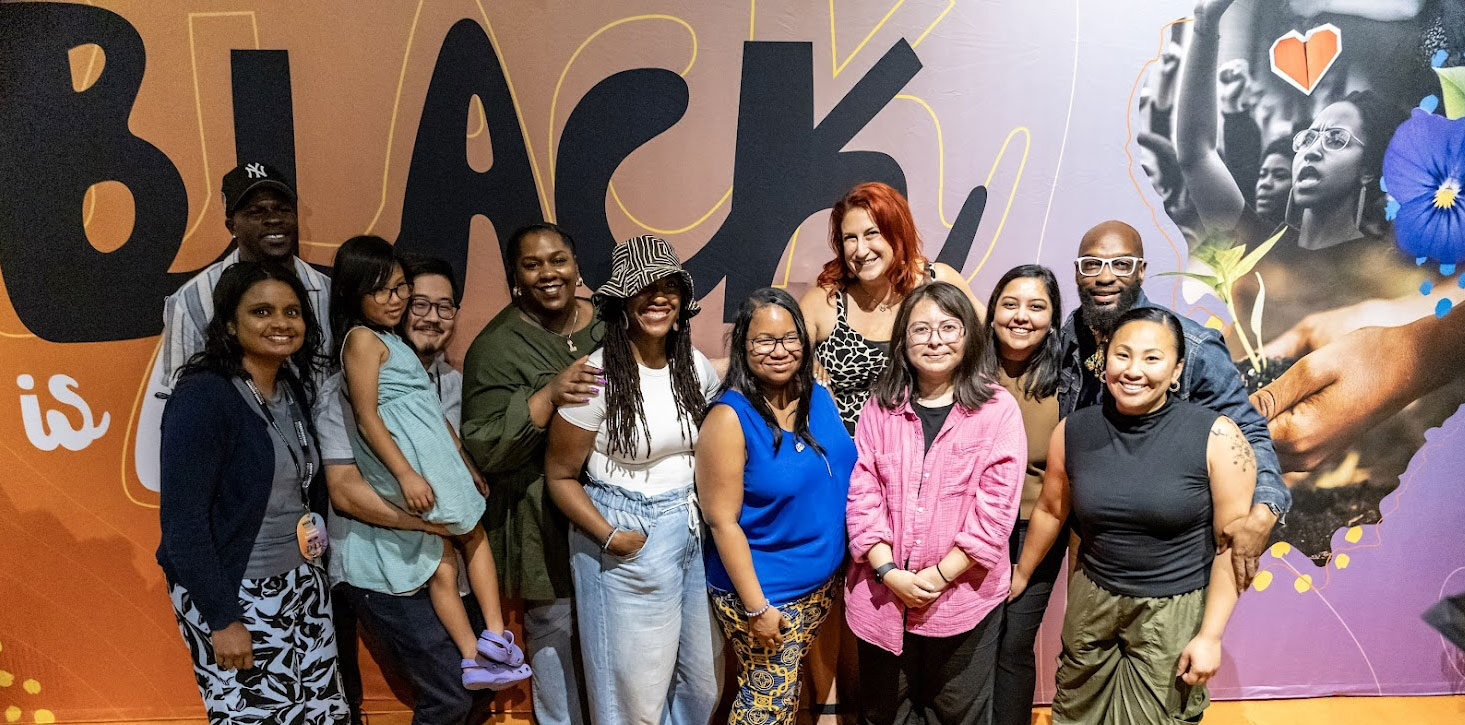
Carrying forward other lessons from the landscape report — the importance of lifting up Black life throughout the state and helping connect grassroots efforts — in July 2025 Grand Victoria Foundation hosted Black Abundance, a convening of more than 200 leaders from organizations across Illinois to strategize together for racial justice and “celebrate Black joy and culture.”
The foundation’s grantee partners organized and designed the convening, from strategic working sessions to spaces for self-care and poetry, singing, and dancing. One participant, Mr. Norris, a longtime community organizer, said, “In all my 72 years as an organizer in Illinois, I’ve never attended or experienced an event like this. It was informative, inspirational, and full of hope and joy. It was truly powerful.”
The event is already having ripple effects. Regional committees are forming for people who connected at the meeting; a coalition is gathering around voter engagement, a priority that emerged at the meeting; and the convening’s theme of abundance is continuing through an ongoing project, supported by Grand Victoria Foundation, to lift up stories across the country of people who are advancing Black-led work and countering negative narratives.
The project is one of the ways Grand Victoria Foundation is working to listen, decenter itself, and become more accountable to Black communities.
“What does it mean for us to accomplish our mission?” Bush says. “By taking this racial justice ecosystem approach, it will get us closer to having a clearer sense of that.” The goal, she says, is to be able to say down the road: “We have hit the markers of change that have come directly from community.”