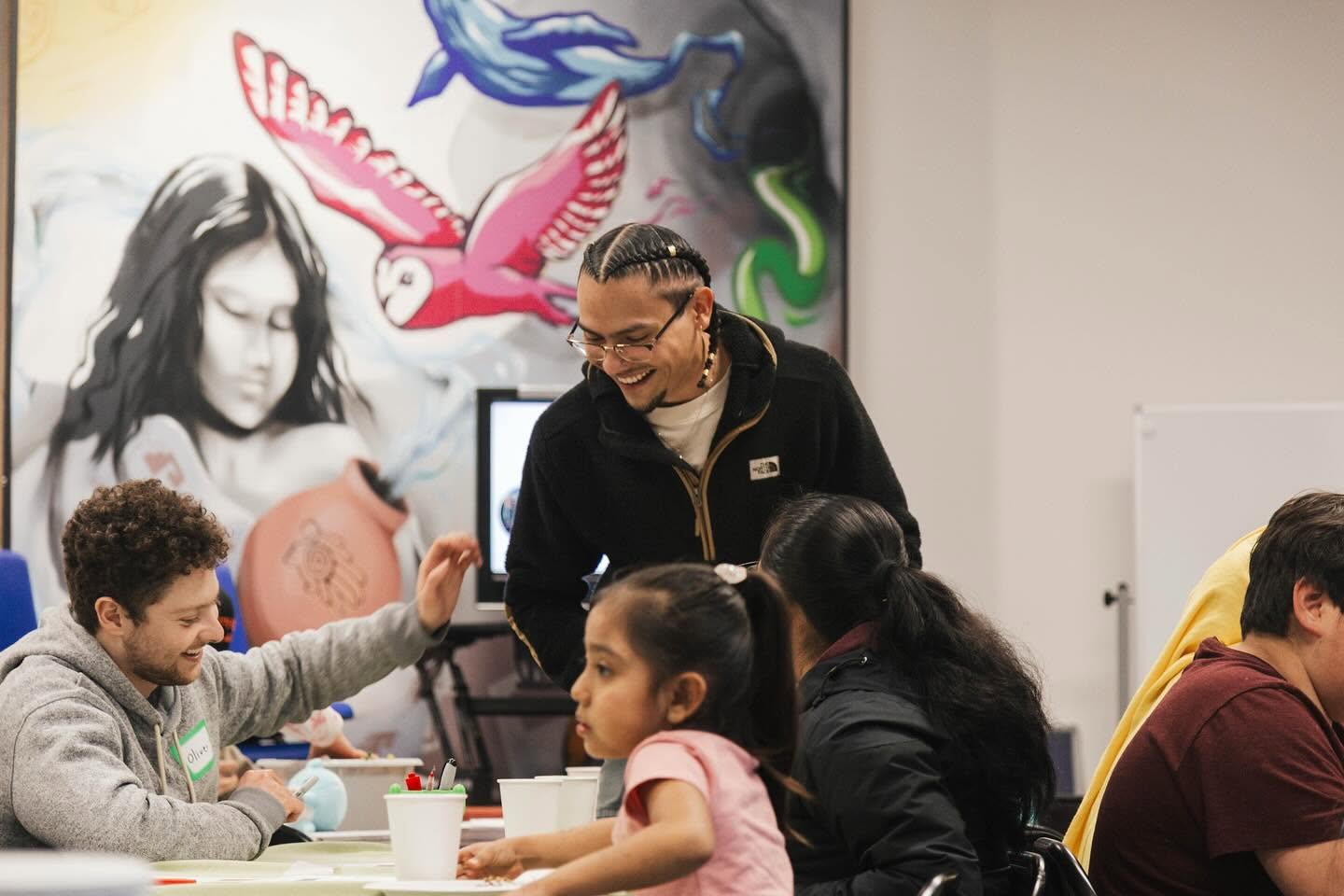
Vamos Outdoors Project is a community-centered organization serving Latine, migrant, multilingual, and newcomer youth and families in the far northwest corner of Washington State. Here, Vamos leadership team members Andy Basabe, Julián Medina-Schroeder, and Walter Topete discuss how the organization’s roots in the community led them to expand from outdoor and academic programs to broader support for families, and they reflect on ways that funders can better honor the knowledge and voice of communities.
A local funder, the Mount Baker Foundation, has been working with Vamos as part of its own journey toward deeper connection and power-shifting to community. (Read more about Mount Baker’s evolution in an accompanying post.)
This conversation has been edited for length and clarity.
How have you seen funders listening or not listening to community? How can they do it better?
Basabe: There needs to be a lot more resources provided to organizations doing this work. Among foundations, there’s an underestimation of the amount of time relationship-building takes and the resources required to do it. There’s the inviting into that space and then also building belonging and capacity and understanding and addressing the institutional barriers. Our ability to support that in foundations comes from our own internal experience of navigating it in our own staff with each other. That needs to happen first: resourcing the people that are already doing the work.
Medina-Schroeder: Trust is at the center of it. A relationship of trust with funders gives us flexibility to do the work that we know how to do. Having unrestricted funding allows us to prioritize in ways that reflect what we see.
Listening is a continuous thing. We all learn how to advocate for our community better and how to bring those things to a systemic level. We’re all continuously learning and listening to each other. It’s a hard question: How do we listen better? I would say that trust is what will build a healthy relationship that can be listening on both ends.
Basabe: With listening, there are so many deeper questions, especially when we’re looking at cross-cultural communities. Foundations often are skipping the first question: What would people do if they had the resources to figure it out for themselves? That is the underlying question.
Given the community’s hierarchy of needs, is this what the community would do with more resources? Would creating a forum or convening be the next step that a community would take if they had an extra hundred thousand dollars? There are a lot of assumptions that foundations and even Vamos ourselves have. We are in this mission-driven space, and there’s a huge amount of need in our community. There’s tension through all of that. Part of what has allowed Vamos to be successful is that we have our mission, but we also are trying to address so many of these other things. If a foundation says, “We want people to be involved in this conversation,” but the community is having basic-needs struggles, what is the balance there? It may seem like an impossible question to answer, but also it’s necessary.
Topete: From my own perspective as an immigrant to this country, my parents were very isolated. I’m sure in Houston, Texas, of all places, there was resources for my parents. But the truth is, they worked 12-hour days. They didn’t really have time for those things, even if they knew about them. They were too caught up in taking care of their kids.
So when Vamos is offering an opportunity for kids, people are going to jump at that. I know my parents would do anything for me. I see the same thing in a lot of parents, even my friends who don’t know how to feed themselves and now they’re feeding their two-year-old kid. That’s how Vamos ended up interacting with parents and families so beautifully and so organically. Parents want to have their kids do a fun outdoor thing. Next thing you know, you’re talking to Julián about a workshop he’s putting on. You’re talking to Rebecca about family resources.
What are you hearing from your community in this moment, and how are you responding?
Basabe: With all of these disasters — immigration, this flooding [of December 2025], the flooding of 2021, COVID — the same barriers exist for the communities we serve. The same inequities are happening. One of the struggles is being listened to or being taken seriously. We are sharing this information with the same foundations, the same governments each time. There’s a lack of willingness to address those things.
During COVID, there was so much money invested in a lot of services, like mobile healthcare or more navigator supports, for a brief period of time. They were preexisting needs that were being addressed. If we think about the extent of resources provided across our country during COVID, those are what are needed to make these changes. They need to be permanent.
Medina-Schroeder: This is something that continuously comes up in feedback from families. We ask, “What do you need? What would make things better right now?” Oftentimes, the families say, “You remember that thing from when there was COVID, what happened to that?”
Basabe: We don’t particularly have a platform to advocate for some of these bigger things. Because of the level of resourcing we have, the access to philanthropy, connections to wealth, we’re in a three-month budget cycle. We get stuck in this hamster wheel of doing program deliverables, and also wishing we could make these bigger changes. One cool thing about Mount Baker Foundation giving us $200,000 is it gives us a little more freedom to address some of these things.
We want to communicate with the families, figure out what their needs are, and then come to institutions saying: these are our goals, and you’re the organization that has the most efficacy to get those goals reached.
Can you give us an example of what you’re seeing?
Topete: During COVID, we had a family workshop series revolving around mental health. We had family group therapy, we had art therapy, and we also had individual therapy for youth and teens. That was really great, and it was an initiative via funding from COVID. That funding eventually ran out. When the ICE raids were happening more and more frequently, a lot of our families were asking for those spaces again to be able to talk with their kids.
So we applied to a funder who put out a call for emergency funding for disaster preparedness. The descriptors of what they were funding were a lot of natural-disaster things, which is good and important. But our community is asking, specifically: “I want help preparing for the disaster that would happen if I got detained or deported.” We applied for that funding under that description of what we think is a disaster, what our community is thinking is really a disaster. It wasn’t accepted because that’s not what they defined as a disaster or as an emergency. That’s a good example of disconnect.
Where are there opportunities for funders to access the knowledge that is held by community?
Topete: Hire people from the community. That might require a reevaluation of what is on the job description. To ask for a college degree is inherently putting a barrier on what sort of experiences and knowledge you’re allowing into your workplace. Just take a shot, and if you need to do some training, then do that. It might be more intensive in the moment. It will be uncomfortable because they’re going to come with a lot of new and different perspectives. But that is the truth of it all.
That’s not the be-all end-all solution, but it’s a huge step in the right direction. Just hire somebody from the community that you’re trying to serve, along with reevaluating what you’re asking for in your job description.
Medina-Schroeder: I agree with that answer. A lot of the time, the listening portion of it is just going to feel like a broken record. Just hire someone who knows that already and can implement it and have those answers.
Basabe: Give the money to the community first. Then wait till that capacity is built within the work that the community is already trying to do. Then ask, “Hey, you guys are doing so good at addressing your needs. We gave you the money, and now that you’re taking care of what you want to take care of, do you have time to help us with this stuff?” That order is backwards right now. There is all this interest in bringing community voice in, but funders are ignoring the preexisting asks of the community.
How has your relationship with Mount Baker Foundation been evolving?
Topete: Mount Baker Foundation genuinely has a lot of trust in us. They’re really curious and ask us a lot of questions and ping us in a lot of conversations. We get to tell them what we think. The first time they ever did a matching fund was with us. They trust us to the point where they’re actively changing the way that they operate in order to better serve us and our community.
Medina-Schroeder: In the conversations with the team at Mount Baker, I’ve never felt like I’ve had to justify our reasoning for doing things the way that we do it. It’s a shift in how the relationship is formed. They are willing to take a step back and question some of the assumptions and pre-formed framings that the philanthropy world has. They have that curiosity to learn more.
Andy Basabe
Programming (Connections), Vamos Outdoors Project
Julián Medina-Schroeder
Community & Youth Engagement, Vamos Outdoors Project
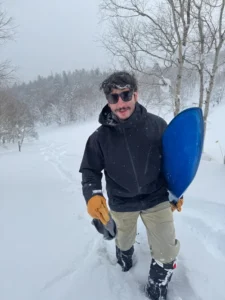
Walter Topete
Programs & Development, Vamos Outdoors Project