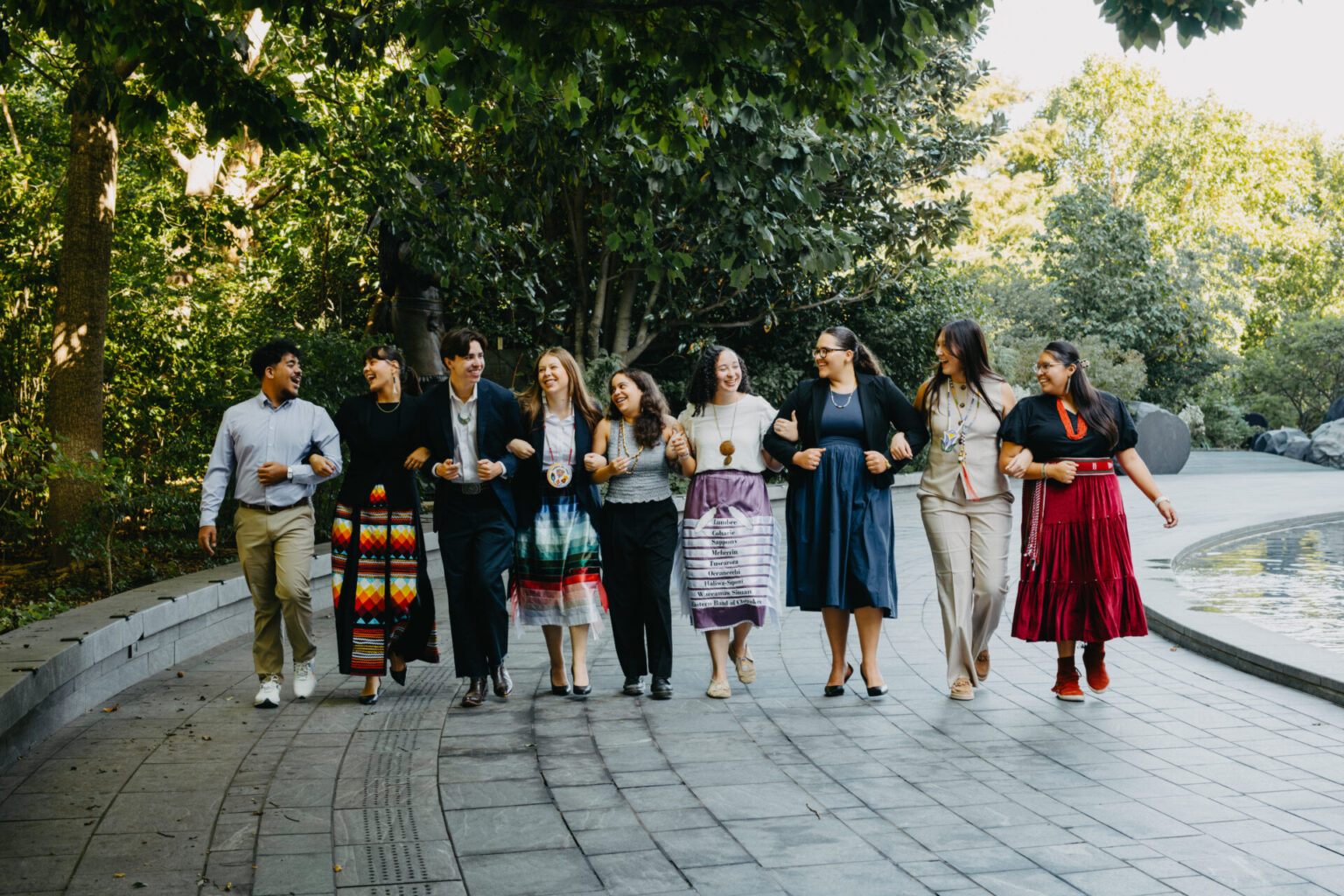
Anagali Duncan and Krissia Tuzroyluk participate in Native Americans in Philanthropy’s Native Youth Grantmakers and Indigenous Tomorrows Fund, participatory grantmaking programs that involve young people through the age of 24. Duncan, a graduate student at the University of California, Los Angeles, is a citizen of the Cherokee Nation, in Oklahoma. A recent college graduate, Tuzroyluk’s tribal affiliation is with the Iñupiaq from Native Village of Point Hope, Alaska.
We asked them about their experiences with Native Americans in Philanthropy (NAP) and what it looks like when funders hand over power to young people and the communities where they live — and what it looks like when they don’t.
The conversation has been edited and condensed.
What made you want to get involved with NAP’s youth-led participatory programs?
Duncan: I wanted to challenge the assumption that our communities are problems that need to be solved, rather than that we are partners with a lot of knowledge. A lot of times, Indigenous communities have been studied or talked about by people that have never lived where we’re from. That means that in reality, the people most affected by some of the challenges tribal communities face are farthest from the decision-making power. I knew NAP’s work and saw how they had moved away from investing in communities to investing with communities. And in doing so, I saw an opportunity to reframe the question from not just be how can we help communities, but how can we trust communities enough to let them lead in their own initiatives.
Tuzroyluk: I hadn’t heard of NAP and I didn’t know what being a grant reviewer meant, but I did my research, and realized it would be meaningful to be part of changing who decides where funding and resources go. Growing up in Point Hope, I’ve seen how decisions about our communities are often made by people who aren’t familiar with our realities and how different they can be from a Western way of living. Getting involved meant having the opportunity to move from caring about these issues to actually having a role in seeing where funding goes. I also think it’s really amazing that the Indigenous Tomorrows Fund is about youth leading the way. I thought this was something special for me to do and bring back to my community.
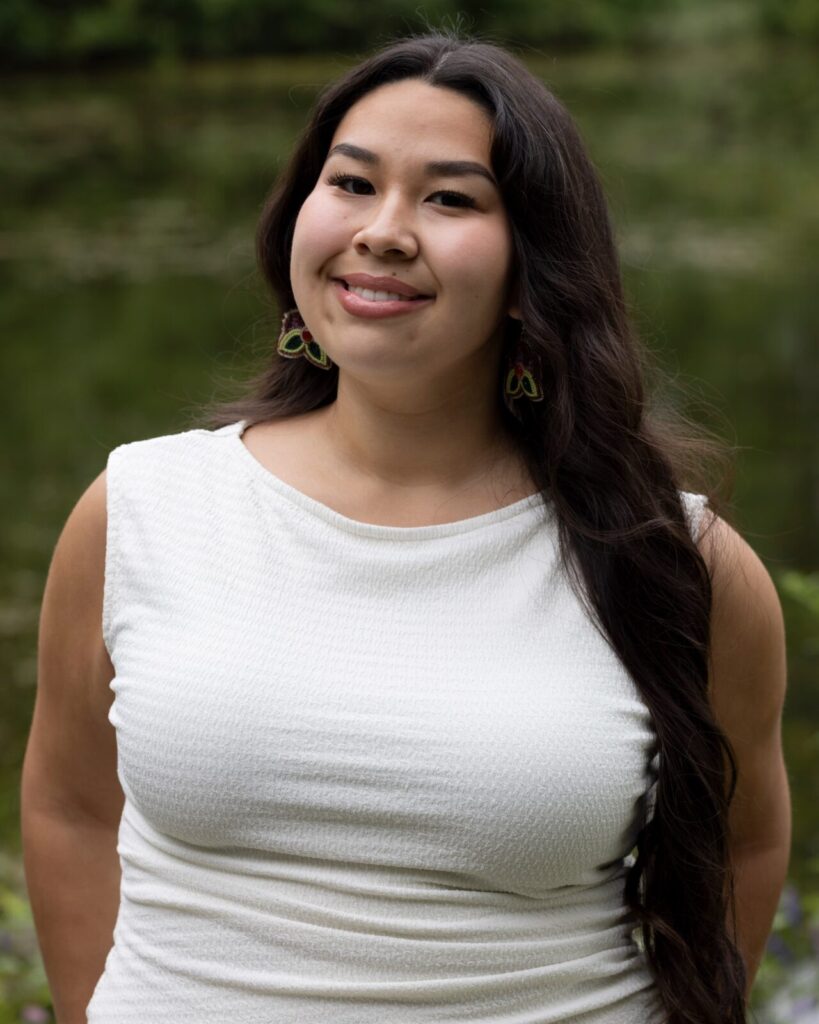
I want to see the emphasis shift from what philanthropy funds to who philanthropy trusts.
Krissia Tuzroyluk
Why is it important for young people to be involved in philanthropy?
Duncan: From my perspective as someone who grew up on my reservation, I feel like there’s a lot of intergenerational fracture, much of it the consequence of colonialism, boarding schools, and all these different things that have affected our communities and pulled us apart. Traditionally, since time immemorial, we have valued people from all parts of life — young people have a perspective of the world that is very forward-looking; older people have the most experience living in the world; and the people in the middle do the work and fill in the gaps. So I feel like having Native youth in philanthropy is a natural way to reclaim the intergenerational values, the traditional way to approach everything.
In your work with NAP, can you describe a time when something you brought to the table because of your lived experience changed the outcome of a decision?
Tuzroyluk: Growing up in Point Hope, I’ve learned that the institutional capacity an organization has isn’t the same thing as their community capacity. Just because a small organization doesn’t have a large staff or a dedicated grants application manager, that doesn’t mean they don’t have strong relationships and trust within their community and the ability to make a large impact.
We had an application from a small organization — one that looked like they could have come from my home town —and I could see there was the potential for this applicant to have really, really good impact on its community, but I also knew that they wouldn’t be able to check all the boxes for a grant. The way the process went at NAP, I was able to advocate and have my perspective heard, and our reviewing committee was able to evaluate the applicant outside the regular rubric — and it got funded.
Duncan:I want to give a shout-out to all the other Native Youth Grantmakers who advocated for organizations that might not have the capacity to put together a “resume-perfect” application or fit the image of what a Western philanthropic institution might expect from a grant recipient. We carried those conversations into the work of developing the criteria and application for the Indigenous Tomorrows Fund.
One of the most important things I learned was the power of the words “and more.” Including those words in an application creates space for Indigenous communities to share the full breadth of their work, including the things that might not fit neatly into the questions we ask or the categories we create. An organization might focus on food sovereignty, for example, while also doing important work in youth engagement. They should be able to explain how those efforts connect, or how they were never really separate to begin with. Categories can be confining, especially when they don’t reflect the interconnected nature of Indigenous community work. So, we included the words “and more” throughout the application, about ten times, to remind applicants that their work doesn’t have to fit within the boundaries we set. With this in mind, institutions should adapt their systems to Indigenous realities rather than forcing Indigenous communities to reshape their work to fit institutional expectations.
We also gave organizations the opportunity to tell us how much funding they needed without questioning their requests based on our own assumptions. They know their communities and their needs better than we can know them from the outside. Even as Indigenous youth, we have blind spots, too. We wanted to create a process that acknowledged that reality and made room for communities to show us what we might be missing. For me, that is part of what meaningful grantmaking looks like: trusting communities to define their own needs, remaining open to what we don’t yet understand, and being willing to learn.
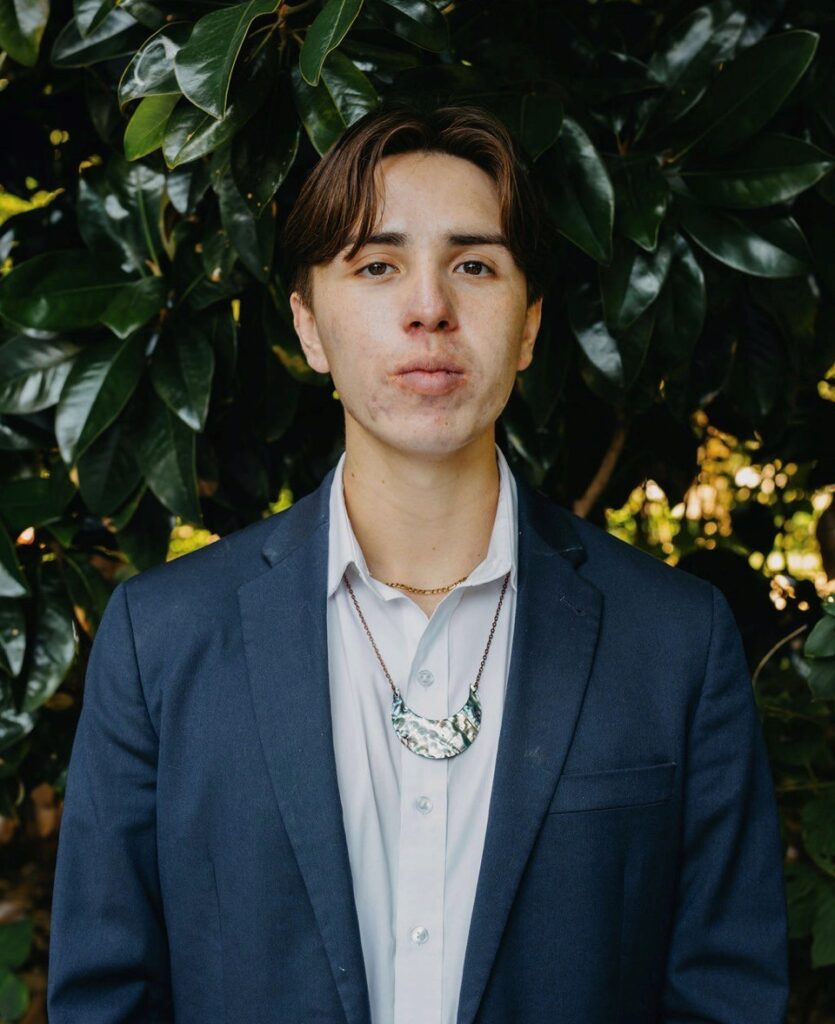
I want institutions to ask themselves why they have been so slow to trust us, what they can learn from the knowledge we already hold, and what it would mean to share not just their resources, but their power.
Angali Duncan
What does it look like when a funder is truly handing over decision-making power to young people?
Duncan: It means more than inviting young people into a process after the decisions have already been made, or asking us to participate in conversations where the real decisions are happening somewhere else. It means giving us, as young people and Native people, actual authority over grant criteria, funding priorities, allocation decisions, and accountability. Power is not transferred simply by handing young people a microphone, giving us a platform, or offering us a seat at the table. It means trusting us to help shape the table itself, and giving us the authority to make decisions that have real consequences.
Honestly, it was a little intimidating at first to see just how much responsibility NAP was willing to entrust to us. I had worked with other organizations and youth councils where it sometimes felt like the expectation was simply to show up, take a picture, and serve as proof that young people were included. There is a difference between being invited into a room to represent youth and being trusted to make decisions. With NAP, I began to understand what it looks like when young people are not just present in a process, but have the power to shape it.
Tuzroyluk: I once had a conversation with someone from a big foundation about their grant-reviewing process and I asked if they would be interested in having any youth reviewers, and she was very excited about my question and said that she thought that would be a very powerful thing, and it would look good for their reporting. I left the conversation feeling like they would need to do more than acknowledge that it would be nice to have youth involved, especially if it was just because they thought it would look good.
At NAP, we have the ability to be heard in a way that impacts or really leads to the outcomes. It’s not the adults making the decisions after listening to the young people, it’s us determining what the application asks, what reporting looks like, and how success is defined. It doesn’t feel just youth-centered, it’s really giving power over to youth.
What do you hope changes about how conventional philanthropy is done, maybe in part influenced by the work you’re doing?
Duncan: I’m not interested in changing philanthropy simply so institutions can become better at helping communities. I want to see philanthropy change so that communities have greater authority to define, shape, and sustain their own futures. Too often, our communities are viewed through a lens of scarcity, defined by what we lack or the challenges we face. But our communities are also sources of knowledge, resilience, and governance, with systems that have sustained our people through centuries of colonialism and attempted genocide.
Philanthropy needs to move beyond seeing Indigenous communities as recipients of help and begin recognizing them as authorities over their own futures. We should not have to continually prove why our communities deserve investment. Instead, I want institutions to ask themselves why they have been so slow to trust us, what they can learn from the knowledge we already hold, and what it would mean to share not just their resources, but their power.
Tuzroyluk: I want to see the emphasis shift from what philanthropy funds to who philanthropy trusts. With decision making, it means moving from consultation with organizations and community members and youth to handing over real authority. With funding, it’s knowing that all organizations shouldn’t have to fit the same mold to demonstrate that they are deserving of support.
I just read a Brookings Institution paper on underinvestment in Indian Country, and one thing that stood out to me is the idea that data and systems that institutions use to make decisions don’t always fit the realities of Native communities. It reinforces how conventional structures can miss what’s actually happening in our communities. It reinforces how we are the ones who know the realities. We are the experts.