




Looking at your role/function within your foundation.
What are listening practices that can shift power?
Assess how you are listening through a set of reflection questions.
There are many ways of knowing. Participants’ first-hand experiences and perspectives produce knowledge that is just as valid as data from other monitoring and evaluation activities, and should be a critical component of your approach to measurement, learning, and evaluation.
Rooted in the idea that involving more people in meaning making promotes more inclusive, equitable, relevant, and actionable interpretation of information, this free, hands-on guide offers step-by-step activities and practical techniques to involve and elevate diverse voices in collaborative data analysis.
This reimagined approach to learning and evaluation makes the case for centering your grantee partners’ definitions of progress and making philanthropy more accountable to movement organizers. It features recommendations and resources for funders, including a one-page tool meant to replace traditional annual reporting requirements, help nonprofits tell their stories, and encourage funders to learn alongside community members.
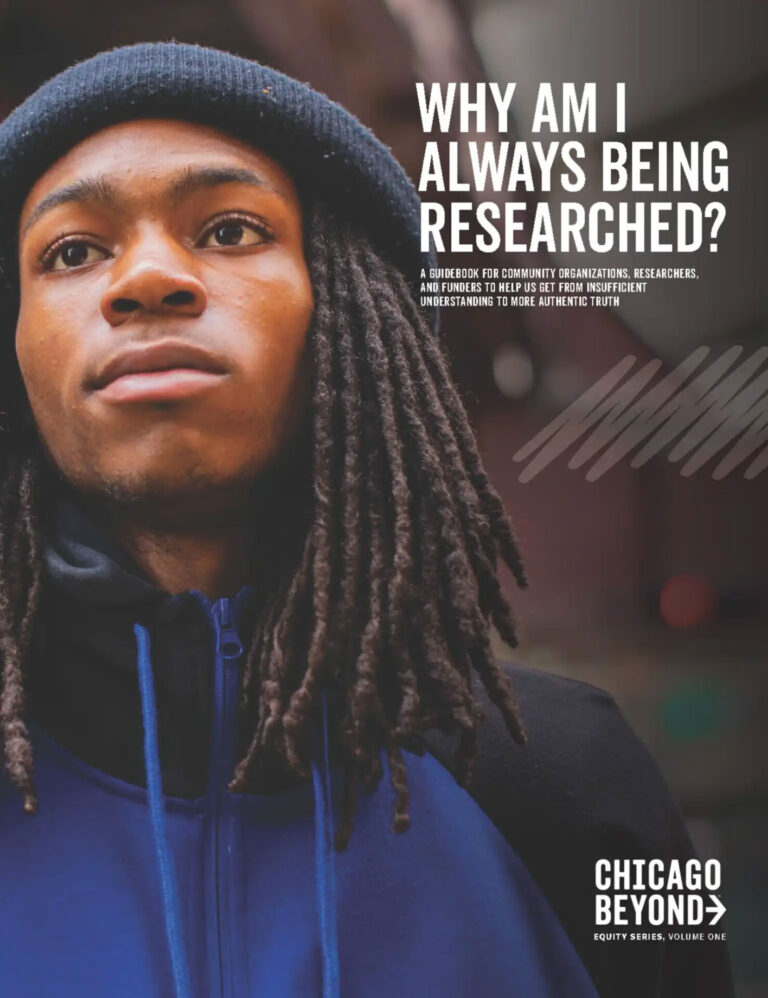
This guide will help you and your foundation colleagues reimagine power dynamics and level the playing field on which you design research, generate knowledge, and make decisions. It provides an equity-based approach to research that offers a path to restoring communities as authors and owners.
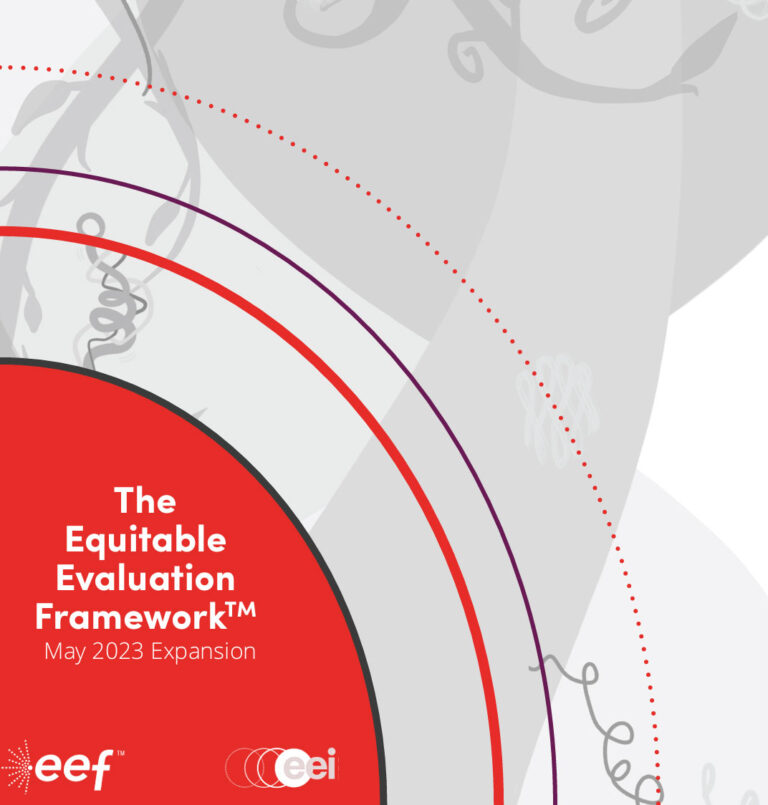
This framework invites evaluation practitioners to recognize culture, context, and power in their evaluative work and to make explicit the ways they are tending to each. It can be used to design a measurement, learning, and evaluation strategy that invites alignment of purpose, process, and policies to shift power to community.
See publications and projects here to help orient your work in any type of community around the idea of Indigenous data sovereignty, the right of a nation to govern the collection, ownership, and application of its own data.
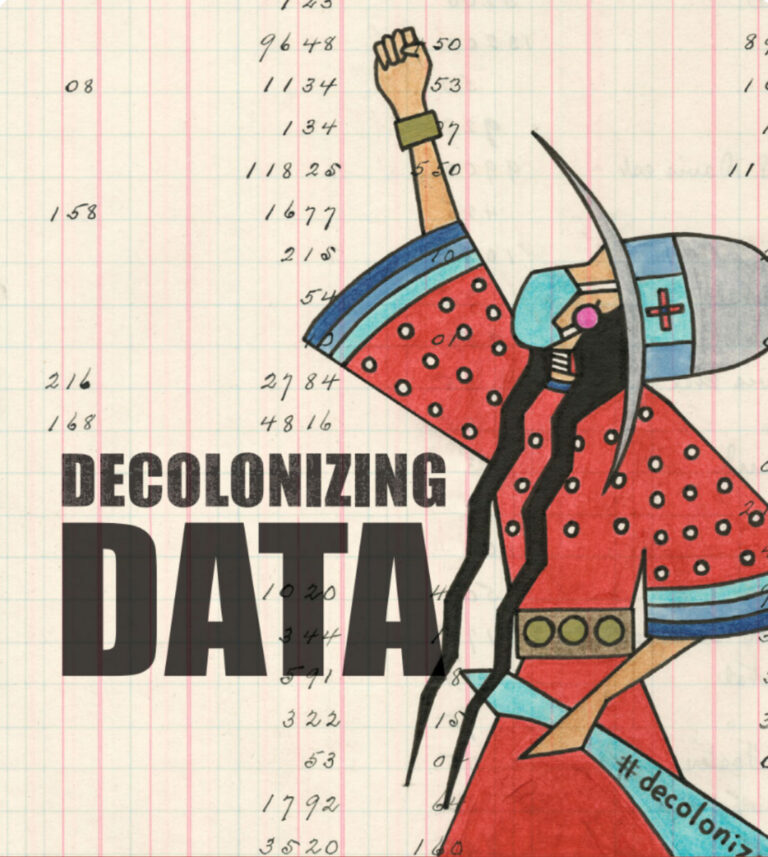
This set of tools will help you understand how and why to “decolonize data,” using Native scientific methodologies to collect and present data with the necessary context to tell the complete stories. Decolonizing your data is essential to truly understanding and hearing the people and communities at the heart of your work.
Use these tools, including one that matches research questions to methodologies, to bring more equity and fairness to how you look at and use data to tell the stories of the people and communities you seek to transform.
This guide offers practical tools, tips, and examples for integrating participatory learning into practice, such as integrating grantee and community input, and addressing limitations in traditional feedback loops.
Sobrato Philanthropies collaborated with researchers to engage more than 120 grantees in focus groups to shape a participatory evaluation process to support its grantmaking strategy to advance economic mobility for Silicon Valley’s most excluded residents. In addition to influencing Sobrato’s view of what mattered and what needed to change, grantee representatives also played a crucial role in selecting the evaluation firms, sharing decision-making power and receiving compensation for their participation.
The Partnership for the Bay’s Future, an initiative of the San Francisco Foundation, grounds its participatory learning in four guiding questions meant to promote trust and mutual learning: how success is defined, who carries the labor of evaluation, who interprets the data, and why information is collected. By inviting grantees to define success, involving them in making meaning from data, and being explicit that learning is for improvement rather than funding decisions, the initiative creates space for honesty and relationship building.
At the Global Fund for Children, participatory learning is part of a broader shift toward trust-based philanthropy. Moving away from compliance-driven metrics, the fund emphasizes reflective, narrative-based reporting and acts as a “knowledge broker” across its network, such as through peer learning exchanges, partner-led research, and capacity-building initiatives, like convenings and retreats.
The James Irvine Foundation’s participatory learning journey has focused on listening and learning from its grantees. While some participatory approaches involve direct engagement with community residents, others can center on grantees — organizations that have deep roots in their communities and actively engage with residents and the issues they face. Irvine has prioritized working closely with grantees to inform its learning and decision-making, recognizing their role as trusted partners with direct community connections.
The Katz Amsterdam Foundation collaborated with global social impact firm FSG and representatives from seven mountain resort communities to create a shared measurement framework with joint indicators for mental health and well-being. Previously, grantees had shared that key data on mental health and community well-being were unavailable for many mountain resort communities, making it difficult to measure their impact or develop programs that truly addressed community needs. Informed by community surveys conducted every other year, the data is now available through a public-facing dashboard in English and Spanish. Grantees have leveraged this data for strategic decision-making, targeting programs for specific sub-populations, securing additional funding, and collaborating effectively across regions.
Mix and match to find the examples, resources, and reflections best suited to help you and your organization shift power to the people and communities at the heart of your work.
Funders are moving toward listening and participatory practices at different rates and from different starting points and perspectives. We also know that shifting power is not easy work and requires a strong internal commitment and continuous learning. It’s best to be clear on your organization’s motivations, capabilities, and goals. As you engage with this menu, consider your funding practices, operations, policies, and values — and then identify where change will best serve your foundation and the people and communities you seek to serve.
We recommend examining the menu’s resources and examples with a willingness to turn kernels of ideas into something right for you. No matter where you start or the path you travel through this menu, we suggest spending time on the reflection questions, perhaps engaging colleagues to help you and your organization better understand and prepare for what it means to listen to shift power.
Our Participatory Philanthropy Toolkit, included as a resource in the menu, has a Funder Readiness Assessment that can be adapted to different listening practices and help prepare you to make changes in your priorities and practices.
We offer a range of examples and resources because there are no one-size-fits-all solutions; and we share them in a menu format so you can choose what’s interesting or relevant to you and your foundation. We don’t rank the practices or the organizations employing them or intend to signal that any featured funder has met its listening goals across the board. Each example represents only a moment in time — a practice one of your peers told us (or an intermediary) about, and that we hope might inspire you to enhance your own listening work.
Similarly, we do not rank the resources, though we did select them based on a set of criteria, including:
New resources are always coming online. We hope that the ones we’ve included are helpful while also sparking your curiosity and helping you forge an ongoing relationship with the creators and other aligned efforts.
We are always looking to add more funder listening examples and more resources. Please reach out to our communications team.
Please reach out to our communications manager, Debra Blum.